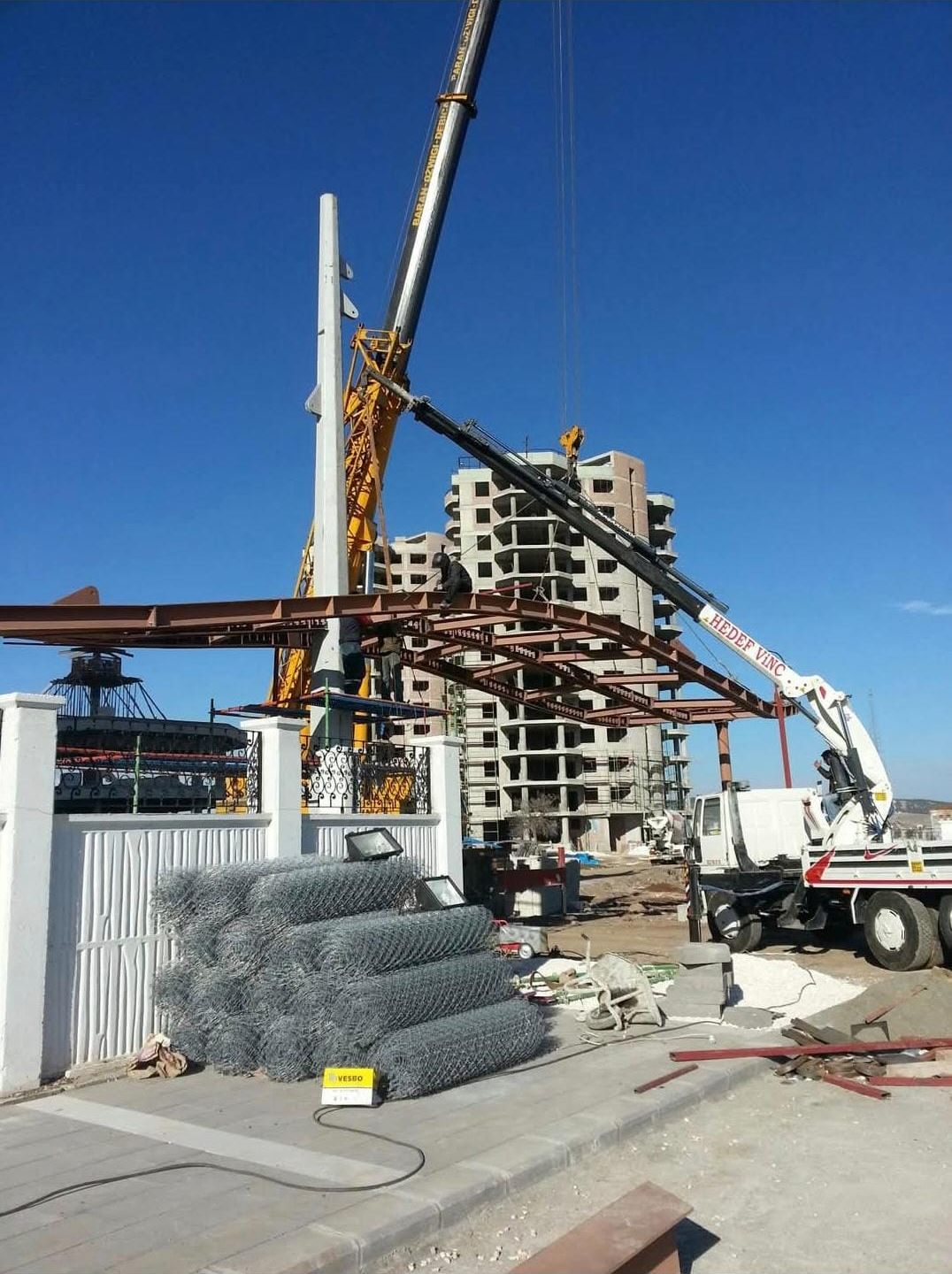
Lifting work done with a crane is extremely safe when it is planned properly — and one of the main sources of serious site accidents when it is not. With several tonnes hanging in the air, there is no margin for error: one moment of carelessness can cost lives, property and your project schedule. That is why crane safety is not a burden the operator carries alone; it is a shared discipline that everyone on site follows.
As a team that works on all kinds of sites along the Milas–Bodrum corridor — from construction sites to marinas — we run through the same checklist on every single operation. The 10 rules below are the basic steps that are simply not negotiable for us on site.
The 10 Safety Rules We Apply on Site
-
1. No job starts without a lifting plan
Before work begins, the weight of the load, the lifting height and the working radius are checked against the crane's load chart. Where the load will be picked up, which route it will travel and where it will land are decided on paper — not improvised while it hangs in the air.
-
2. The ground is checked and the outriggers are fully extended
Most crane tip-over accidents start with weak ground. Before set-up, the bearing capacity of the ground is assessed; loose fill, manholes and covered trenches get special attention. The outriggers are fully extended and proper pads are placed underneath them.
-
3. Slings, chains and rigging gear are inspected before every job
Crushed, cut or frayed slings are never used; deformed hooks or hooks with a faulty safety latch do not go out on site. The sling's rated capacity is selected according to the load and the rigging angle.
-
4. No one stands under the load — and the load never travels over people
This is the most basic rule, and the one most often broken. The area under a suspended load and its potential drop zone are always kept clear; the load path never passes over workers, and the area is taped off if necessary.
-
5. Communication runs through a single signaller
Whenever the operator cannot see the load, a trained signaller directs the lift. Commands come from one person only, by hand signals or radio. The one exception is the stop command — no matter who gives it, the operation stops immediately.
-
6. Weather conditions — especially wind — are monitored
Wind creates a sail effect on loads with a large surface area and can push them out of control. If the wind speed exceeds the limit set by the crane manufacturer, the lift is postponed; work also stops during lightning risk and heavy rain.
-
7. A safe distance from power lines is maintained
A boom or rope coming close to live power lines can be fatal. Overhead lines are identified during the site survey and a clearance distance appropriate to the voltage is set; if that distance cannot be kept, the utility company is contacted to have the line de-energised.
-
8. The load is balanced and a trial lift is carried out
The load's centre of gravity is located and the attachment points are set accordingly. The load is first raised just a few centimetres and held there; balance, sling seating and the brakes are checked during this short pause. If anything is off, the load goes back down and the rigging is corrected.
-
9. No one enters the site without personal protective equipment
A hard hat, safety boots, a high-visibility vest and gloves are the minimum on any crane site; for personnel working at height, a safety harness is added. Anyone without PPE is kept out of the working area.
-
10. The machine gets a daily check
Before starting work each day, the operator checks the ropes, the hook, the brakes, the hydraulic system and the safety devices. If a leak, a crack or an unusual noise is found, the machine does not go to work — the fault is fixed first.
Practical tip: the moment you feel unsure on site, stop the operation. Repeating a lift costs you a few minutes; undoing an accident is usually impossible. "If in doubt, stop" is worth more than any written procedure.
These Rules Are Standard Practice for Us
At Hedef Vinç we treat these 10 rules not as a list of suggestions but as the standard way every operation is run. Our crane rental jobs always go out with experienced operators; the lifting plan, sling selection and site safety are our responsibility. And because crane repair and maintenance is done in our own workshop, every machine we send to a site has already been through inspection.
If you are planning a safe lifting operation in Milas, Bodrum or the surrounding area, give us a call. We will listen to what the job involves and work out both the right crane and the safe way to do it — together.